Posted by Orange Coast Psychiatry
Filed in Family Health 204 views
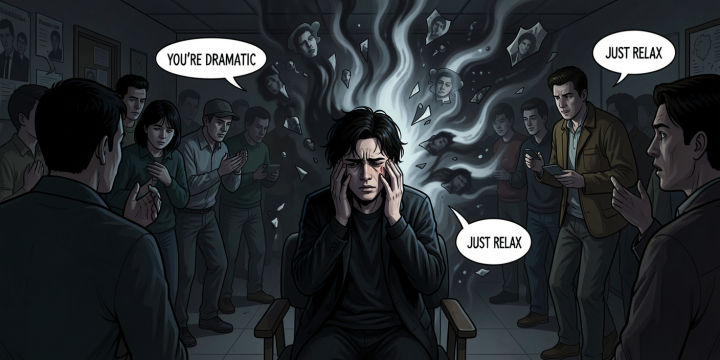
Trauma does not necessarily come from a single event that you can point to. Sometimes it comes softly in years of being ignored, in a relationship that slowly eroded who you were, in a loss you were never allowed to grieve, in a childhood that seemed fine from the outside but felt like walking on eggshells from the inside.
And it alters a person silently. In ways that you may not see for a very long time.
You may notice it in little things first. The way you recoil at some canons of voice. The way your stomach gets twisted up in places that are totally ordinary for everybody else. The way you occasionally leave your own body gets curiously detached and see yourself from a distance when things get too intense.The fragrance of some things, or the seasons of year, or the tunes, that carry with them an emotion you can't quite put your finger on or describe.
It is extensively documented by now how trauma alters the neurological system, even though many of us experience it long before we have the words to explain what is happening. The body learns to associate specific cues with danger through repeated or strong exposures. And it responds in kind, flooding you with cortisol, restricting your thinking, dragging you into fight, flight, or freeze even when the current instant is objectively safe. The danger is past. But your body doesn’t know that.
Trauma also changes the tale you tell yourself, in small and pervasive ways.
It plants quiet beliefs. I'm too much. Or: I am insufficient. Or: If folks actually knew me they’d run. I don’t deserve the good things. These are thoughts you did not choose. They are judgments your mind made from the experiences that created you before you had the means to question them. And they run deep. Underneath the confident facade. Underneath the beautifully curated existence. Underneath the person you've worked so hard to become.
Trauma alters the way you relate to other people. It can make closeness feel risky. Because intimacy entails vulnerability. Vulnerability is where you got harmed before. So you either keep people at arm’s length for safety, or you bring them so close that any space feels like abandonment. You could find yourself glancing around the room for the mood of the one you love, adjusting before they even speak a behavior you learned in circumstances where you had to control someone else’s emotional weather to survive on your own. “Would you like to be able to ask for things you need? You can say sorry all you want. It could be hard for you to believe that wonderful things are real, because in your experience good things were often followed by the unraveling of them.
Trauma changes memories in weird ways too. Not all things are kept clear. Some experiences are bits -- bits of sensation, emotion and picture that don't add up to a complete story but appear at unexpected periods and won't stay down. This is not a memory error." That's how the traumatized brain protects itself.
And most silently of all, trauma alters your relationship with yourself. It can develop an inner critic that is harsh and relentless. It breeds a self-doubt that can slowly eat away at all that is good. Feeling disconnected from your own body, your own wants, your own desires might make you feel like a stranger in your own life.
I want you to hear this: it's not your fault at all. Trauma is not a character defect. It’s not a weakness. It's a set of adaptations - amazing, necessary adaptations. That allowed you to survive something that was really hard. The problem isn’t that you reacted to pain. But the trouble was that the response didn't change once the danger was gone.
Recovery is possible. Not as a place to get to but as a direction. Not the forgetting of what happened, but the painstaking, brave job of metabolizing it, so it becomes a part of your story, rather than the author of it. Therapy (particularly trauma-informed therapy) can be a game changer. So can the honest community. So can learning to trust yourself again with careful, continuous practice.
You are not the harm. You are the one who is living with it. And that individual the person who has carried all this is much more resilient than they’ve been given credit for.